Leave Your Message
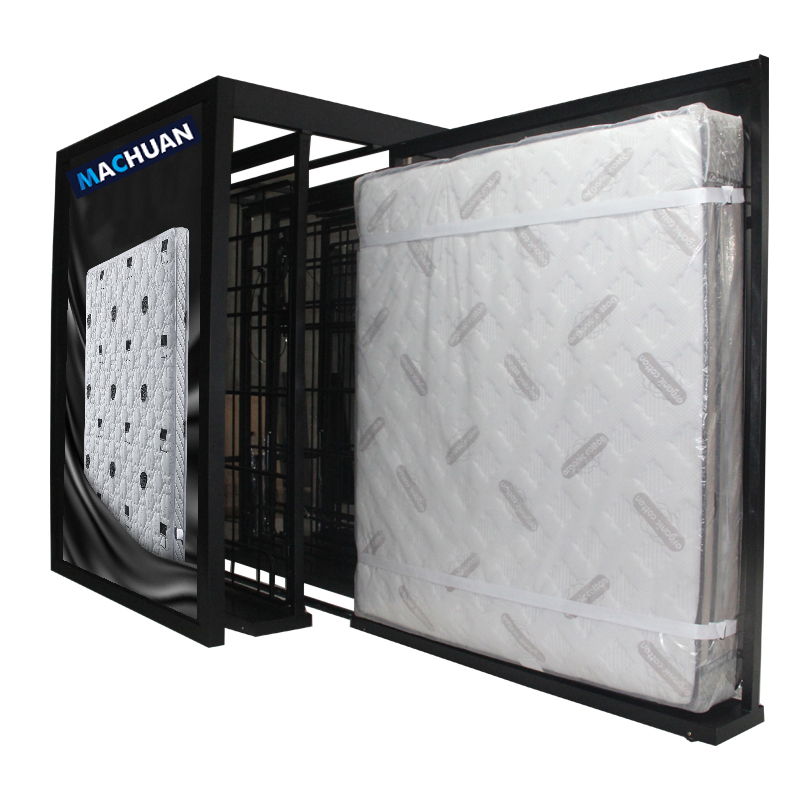
A Mattress Display Rack is basically a retail fixture that’s meant to showcase mattresses in a way that's both secure and easy for customers to view. Think of it as a stand that can hold stacked mattresses, side-by-side models, or even sample units for folks to get a feel for. When you're in a showroom, these racks make it super simple for shoppers to check out the thickness, fabric, firmness tags, and size options—so they don’t have to go lifting heavy bedding around. That sort of practical detail really does make a difference.
The global mattress market is still growing, by the way. According to Grand View Research, it was worth around USD 50.25 billion back in 2022, and experts expect it to keep expanding through 2030. Their reports also point out that more product choices and changing consumer preferences are big factors driving this growth. More options are great, but they can also make things a little tricky when it comes to displaying everything clearly. Retailers need to be smart about space—showcasing as much variety as possible without making the display look cluttered or confusing.
A well-designed Mattress Display Rack System can really boost how well products catch the eye, keep the store organized, and even help staff work more efficiently. These systems might include sturdy steel frames, adjustable supports, tags for products, wheels for easy movement, or integrated sample panels for customers to check out. The exact design depends on a bunch of things—like the weight of the mattresses, the layout of the store, safety standards, and how busy the store gets. Basically, it’s not just a metal shelf; it’s a carefully thought-out setup.
The International Sleep Products Association keeps tabs on the bedding industry, tracking trends and performance through their reports. These insights help retailers understand why flexible display options matter so much. Keep in mind though, they don’t measure rack sales directly, which is worth noting. Even a really nice display can’t fix a poor-quality product or bad customer service. This guide is all about helping retailers understand what goes into a Mattress Display Rack—its structure, different uses, materials, and how to choose the right one—so decisions are based on real facts, not just looks.
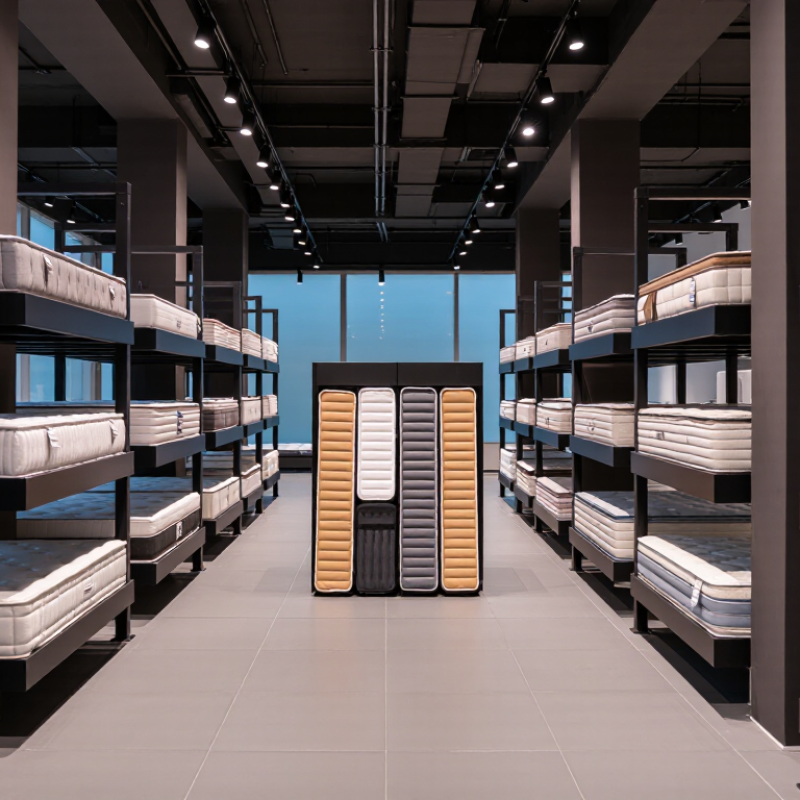
A Mattress Display Rack is a retail fixture designed to hold and present mattresses clearly. It keeps products lifted from the floor and arranged for safer customer viewing. Most racks use steel frames, vertical supports, and adjustable sections. These features help stores display different mattress sizes without wasting valuable floor space. A well-designed rack also allows customers to compare thickness, firmness labels, and fabric details more easily.
Its purpose goes beyond appearance. The rack must support the mattress evenly and prevent leaning, sliding, or unnecessary bending. Stable construction matters, especially in busy showrooms where customers test several products. Adequate spacing improves airflow and reduces contact between displayed mattresses. Clear labels can show dimensions, materials, care instructions, and weight limits. In practice, a rack may look efficient but still feel awkward if customers cannot reach the lower section. That small flaw deserves attention.
Tips: Check the rack’s load capacity before installation. Measure aisle width and mattress height carefully. Use protective supports where metal touches fabric. Keep labels visible from standing height. Inspect bolts, wheels, and floor anchors regularly. A quick stability test can reveal movement that photographs never show. It is also wise to review the layout after customer feedback. Sales data may suggest one arrangement, yet real shoppers may avoid cramped displays. The best setup remains practical, not merely attractive.
| Data Dimension | Typical Specification | Definition, Purpose, or Practical Consideration |
|---|---|---|
| Definition | Retail presentation and storage fixture | A mattress display rack is a freestanding or wall-supported structure designed to hold, organize, and present mattresses in a retail, showroom, warehouse, or distribution environment. |
| Primary purpose | Product visibility and space management | The rack keeps mattresses elevated, arranged by size or type, easier to inspect, and less likely to contact dirt or moisture from the floor. |
| Common rack formats | Vertical, horizontal, tiered, and adjustable | Vertical racks save floor area; horizontal racks support easier top-surface viewing; tiered systems increase display density; adjustable systems accommodate different mattress heights. |
| Typical mattress sizes accommodated | Single, twin, full, queen, and king formats | Rack dimensions should match the local mattress size standard. Common North American mattress widths are approximately 38 in for twin, 54 in for full, 60 in for queen, and 76 in for king. |
| Typical frame material | Powder-coated steel or structural aluminum | Steel is commonly selected for strength and durability, while aluminum can reduce fixture weight. Rounded edges and corrosion-resistant finishes help improve safety and service life. |
| Storage capacity | Usually 1–6 mattresses per bay or section | Capacity depends on mattress thickness, rack height, shelf spacing, loading method, and the manufacturer’s rated load. Heavier mattresses generally require fewer items per tier. |
| Load rating | Project-specific; verify the stated limit | The safe working load must be checked for each rack and shelf level. The combined weight of mattresses should not exceed the rack’s published capacity, and loads should be distributed evenly. |
| Shelf or support spacing | Adjustable to mattress thickness | Spacing should allow the mattress to be inserted and removed without excessive compression or friction. Adjustable supports are useful when displaying foam, hybrid, innerspring, and specialty mattresses together. |
| Floor-space efficiency | Higher than floor-stacked storage | Vertical and tiered configurations use available wall height to reduce the footprint required for multiple mattresses, while maintaining access for customer viewing and staff handling. |
| Display orientation | Flat, angled, or upright | Flat displays show the sleeping surface; angled displays improve visual access in a showroom; upright displays make product labels and side profiles easier to compare. |
| Mobility features | Fixed feet or industrial casters | Fixed feet provide stability for permanent displays. Lockable casters can support showroom reconfiguration, but brakes should be engaged during loading, unloading, and customer interaction. |
| Safety requirements | Stable base, secured frame, and controlled loading | A rack should stand level, resist tipping, have no sharp exposed edges, and be anchored when required by its design or local safety rules. Staff should follow safe lifting procedures for bulky mattresses. |
| Organization method | Grouped by size, firmness, height, or construction | Clear grouping helps customers and staff compare products efficiently. Labels can identify mattress dimensions, firmness level, construction type, and displayed price without relying on brand information. |
| Suitable environments | Showrooms, retail stores, warehouses, and distribution areas | The required rack design varies by environment: customer-facing displays prioritize presentation and access, while warehouse systems prioritize density, handling efficiency, and inventory control. |
| Maintenance | Routine inspection and surface cleaning | Regular checks should examine fasteners, welds, shelves, casters, anchors, and protective coatings. Dust and debris should be removed so that mattresses remain clean during storage and display. |
| Selection criteria | Dimensions, capacity, accessibility, and safety | A suitable rack should fit the available space, support the intended mattress sizes and weights, allow safe product access, provide sufficient visibility, and comply with applicable workplace requirements. |
Note: Dimensions, capacity, and spacing vary by rack design. Always confirm the product’s technical specifications and applicable local safety requirements before installation or use.
The 3.6m Multi-functional Showroom Display Table is a smart solution for presenting tile and stone samples in a clear, organized, and attractive way. Its generous length provides ample space to arrange slabs, tiles, catalogs, color cards, and supporting materials, helping visitors compare different textures, patterns, sizes, and finishes at a glance. A carefully planned display layout can also improve showroom circulation, create a stronger visual focus, and make product selection more efficient for both customers and sales teams.
Designed for flexible showroom use, the table can be customized with integrated storage, pull-out sample trays, display panels, lighting features, or work surfaces according to specific requirements. Options for size, color, material, structure, and surface treatment are available, allowing the display furniture to match different interior styles and sample collections. The products shown on the website are currently out of stock and are provided for reference only. Fully customized solutions are available without MOQ, supporting unique project needs from concept and functionality to final appearance.
It holds mattresses vertically or at a slight angle. Customers can compare sizes, thicknesses, firmness, and cover materials more easily. It also keeps products away from floor moisture and dirt.
Steel frames provide strong support for heavy mattresses. Coated surfaces can reduce scratches and simplify cleaning. However, a heavier frame is not always the better choice.
Measure each mattress’s width, height, and depth. Compare those measurements with the rack’s rated load. Place heavier mattresses on lower levels. Never rely on appearance alone.
Leave enough room for shoppers and staff to walk safely. Customers should reach side panels without squeezing between fixtures. A crowded layout may save space but reduce useful comparison.
Look for stable feet, secure stops, rounded edges, and firmly locking supports. Use protective material where metal touches fabric. Check bolts, wheels, and floor anchors regularly.
Keep price cards at eye level and size labels clearly visible. Arrange firm and softer options nearby for easier comparison. Staff can place fabric samples within comfortable reach.
Clean beneath the base and inspect joints where dust collects. Replace bent labels quickly. Test for movement during a simple stability check. Photographs cannot reveal every problem.
Do not choose a rack only because it looks attractive. It may block lower mattresses or make removal awkward. Test it with real sample mattresses before installation. Small flaws matter.
A Mattress Display Rack is a retail fixture designed to present mattresses in an organized, accessible, and space-efficient way. Its main purpose is to help customers view different mattress sizes, constructions, and comfort options while allowing store staff to maintain a clean and inviting sales area. Typical structural components may include a stable frame, vertical supports, horizontal shelves or platforms, protective edges, wheels, and adjustable sections. Depending on store needs, common types include upright racks, horizontal platform displays, tiered units, sliding systems, and compact wall-mounted designs.
In stores, a Mattress Display Rack can separate products by size, firmness, material, or price range, making comparison easier and improving the overall shopping experience. It can also maximize floor space, improve product visibility, simplify stock organization, and support clearer product information. When selecting a rack, retailers should consider load capacity, dimensions, durability, stability, accessibility, ease of cleaning, mobility, safety, and compatibility with the store layout. A well-chosen display rack helps customers make confident decisions while presenting mattresses in a professional and practical manner.