
Leave Your Message
A Display Metal Rack isn’t just about having a sturdy steel frame to hold your products. It actually influences how customers move around, compare items, or reach for what they need. In a busy store, having the right rack keeps things like bottles, tools, or folded clothes visible and neatly organized. But if you pick the wrong one, it might wobble, take up too much space, or hide those high-margin items you really want shoppers to see.
Different retail setups call for different rack designs. For example, gondola racks are great for supermarkets or general stores because they have shelves on both sides—perfect for maximum display area. Wall-mounted racks are fantastic in narrow shops where floor space is limited. Gridwall systems offer versatile hooks, kind of like customizable accessory displays, and slatwall racks are super handy when store layouts change a lot. Finding the best fit really depends on what you're selling, how big your store is, customer flow, and how often staff need to restock.
Honestly, firsthand experience counts. Always double-check that a rack can handle the weight you plan to put on it, that it’s stable enough, and that shelves can be adjusted as needed. Look into the surface coating too—better quality coating fights rust and scratches. Before you install anything, ask your suppliers for clear measurements and weight limits that have been tested. And don’t skip a close look at welds, screws, and corners—those tiny defects can cause big problems down the road.
Appearance can be pretty deceiving. Just because a rack looks polished doesn’t mean it’s reliable. On the flip side, a heavy-duty rack might be tough to move or install if staff can't handle it safely. And going for cheap might seem like a good deal upfront, but it can end up costing you more if you have to keep repairing or replacing it.
This guide walks you through the common types of display metal racks and points out where each works best. It also covers aspects like durability, ease of maintenance, safety, and overall value. Basically, it helps you make smarter choices, not just go for the most eye-catching option.
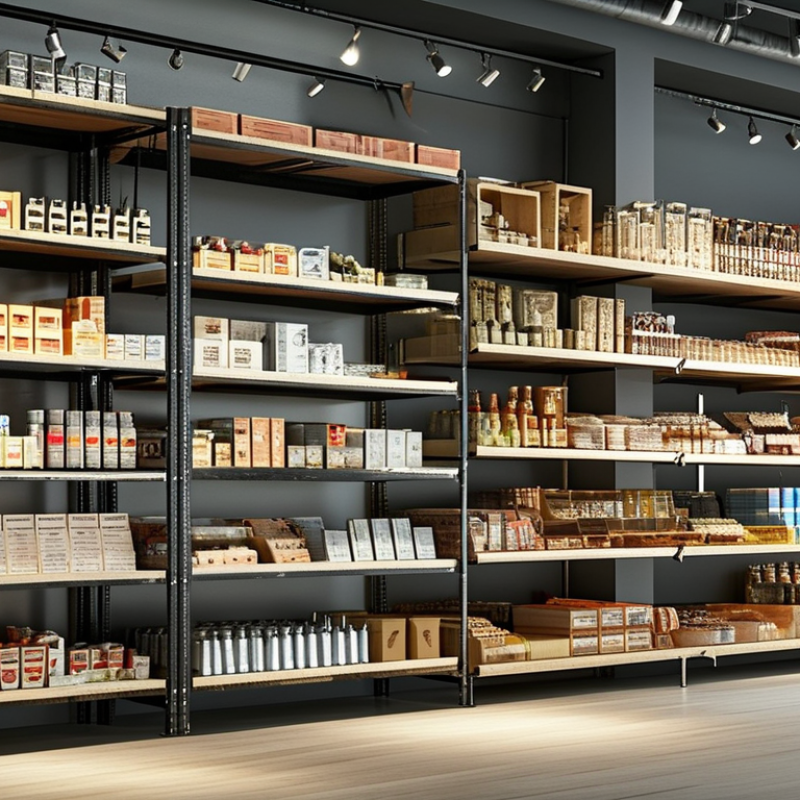
A display metal rack is a structured storage unit designed to present products clearly and safely. It usually has steel frames, adjustable shelves, hooks, or hanging bars. Unlike a closed cabinet, it keeps items visible and accessible. Customers can compare sizes, colors, and quantities without opening doors.
These racks suit shops, warehouses, exhibitions, and service counters. Their open design improves product visibility and makes restocking easier. A powder-coated surface can resist scratches and light moisture, while reinforced joints improve stability. The best type depends on the merchandise. Shelving racks work well for boxes and packaged goods. Slatwall racks suit hanging products. Wire racks are useful when visibility and airflow matter. I have found that adjustable shelves are more practical than fixed ones, especially when product sizes change. Still, adjustable parts may loosen over time if they receive poor maintenance.
Tips: Measure the available floor space before choosing a rack. Leave enough room for people to walk comfortably. Check the rack’s load capacity, shelf spacing, and base stability. Heavy products should stay on lower levels. Use leveling feet on uneven floors. Inspect screws and joints regularly. A rack may look strong, but overloaded shelves can bend quietly. Also, avoid placing sharp edges near busy paths. The ideal display rack is not always the largest one. It should match the products, traffic flow, and daily handling habits.
A display metal rack is a steel or aluminum merchandising structure used to organize, present, and store products in retail, warehouse, exhibition, and commercial environments. The best type depends on product weight, available floor space, visibility requirements, and how frequently the products need to be accessed.
| Rack Type | Typical Structure | Typical Dimensions | Typical Load per Shelf | Best Applications | Main Advantages | Limitations | Overall Suitability |
|---|---|---|---|---|---|---|---|
| Adjustable Shelving Rack | Vertical steel uprights with removable or adjustable shelves | Height: 1.5–2.4 m Width: 0.9–1.2 m Depth: 0.3–0.6 m | 50–250 kg | General retail storage, stockrooms, tools, packaged goods | Flexible shelf spacing, efficient use of vertical space, easy to reconfigure | May require wall anchoring when heavily loaded or installed in high-traffic areas | ★★★★★ |
| Gondola Display Rack | Freestanding central unit with shelves on one or both sides | Height: 1.2–2.1 m Width: 0.6–1.2 m Depth: 0.35–0.6 m per side | 30–150 kg | Supermarkets, convenience stores, pharmacies, and retail aisles | Provides two-sided product access and creates clear shopping aisles | Requires sufficient aisle width and a stable, level floor | ★★★★★ |
| Slatwall Metal Display Rack | Metal hooks, arms, or shelves mounted to horizontal wall panels | Panel height: 1.2–2.4 m Module width: 0.6–1.2 m Projection: 0.2–0.5 m | 5–40 kg per accessory | Clothing, accessories, packaged products, and small merchandise | Maximizes wall space, improves product visibility, and leaves more floor area open | Load capacity depends strongly on the wall, panel, brackets, and mounting method | ★★★★☆ |
| Gridwall Display Rack | Welded wire panels connected with feet, posts, hooks, or shelves | Panel height: 1.2–2.4 m Panel width: 0.6–1.2 m Depth: 0.3–0.6 m | 5–50 kg per shelf or attachment | Pop-up shops, exhibitions, apparel, crafts, and promotional displays | Lightweight, modular, portable, and suitable for frequently changing layouts | Less suitable for very heavy products or large quantities of dense stock | ★★★★☆ |
| Slotted Angle Rack | Bolted perforated steel angles with shelves and connecting braces | Height: 1.5–2.4 m Width: 0.9–1.2 m Depth: 0.45–0.6 m | 75–300 kg | Workshops, archives, storerooms, spare parts, and industrial supplies | Strong, economical, repairable, and adaptable to different shelf heights | Assembly can be slower, and the utilitarian appearance may not suit premium retail areas | ★★★★☆ |
| Rolling Display Rack | Steel frame fitted with casters and shelves, rails, or hanging bars | Height: 1.2–2.0 m Width: 0.6–1.5 m Depth: 0.4–0.7 m | 30–150 kg | Garments, events, movable promotions, and flexible retail layouts | Easy to reposition, supports rapid floor-plan changes, and simplifies cleaning | Casters add cost and may reduce stability if the rack is moved while overloaded | ★★★★☆ |
| Heavy-Duty Pallet Rack | Bolted or beam-connected steel frames designed for palletized inventory | Height: 2.4–6.0 m Bay width: 1.8–2.7 m Depth: 0.9–1.1 m | 500–4,000 kg per beam level | Warehouses, distribution areas, bulk inventory, and pallet storage | High capacity, excellent vertical storage efficiency, and forklift accessibility | Usually unsuitable for customer-facing displays and requires professional planning and protection | ★★★☆☆ |
| Rotating Display Rack | Central vertical post with rotating baskets, hooks, shelves, or panels | Height: 1.2–2.0 m Diameter: 0.4–0.9 m | 2–30 kg per section | Small accessories, greeting cards, toys, cosmetics, and impulse items | Uses little floor space and allows customers to view products from multiple sides | Limited capacity and unsuitable for bulky or heavy products | ★★★☆☆ |
Note: Dimensions and load capacities are typical planning ranges for metal display racks. Actual performance depends on steel thickness, shelf material, frame design, span length, anchoring, load distribution, caster specification, and applicable safety requirements. Always confirm the manufacturer's rated capacity before installation or use.
: It is a steel fixture with shelves, hooks, baskets, or rails. It organizes products while keeping them visible and accessible.
Wall-mounted racks save floor space for packaged goods and accessories. They require strong mounting points. That detail matters.
Choose one when shoppers need access from several directions. Leave clear walking space around it. Overloading can cause instability.
Yes, they accommodate changing product sizes and packaging. Measure products before setting shelf heights. Too many adjustments may make displays look inconsistent.
Put heavier products on lower shelves. Keep lighter items higher. This improves stability and makes lifting easier.
Check the tested load rating for every shelf. Do not rely on appearance alone. Uneven loading can reduce real-world stability.
Locking hooks, controlled access, and open sightlines can help. Keep entrances and payment areas visually clear. No display is perfectly secure.
Check welds, bolts, shelf clips, wheels, and sharp edges. Look for distortion or movement. Small faults can become expensive problems.
Select a rack staff can safely rebuild without special tools. Do not sacrifice stability for faster layout changes. A beautiful rack that shifts is a poor investment.
A Display Metal Rack is a practical storage and presentation solution designed to organize products while keeping them visible and accessible. Built from materials such as steel or aluminum, these racks are typically formed, welded, coated, and reinforced to provide strength, stability, and long-term durability. Their design may include adjustable shelves, hooks, baskets, wheels, or modular sections, depending on the intended use.
Common types include shelving racks, grid panels, gondola-style displays, garment racks, and specialized racks for tools or smaller merchandise. They are widely used in retail stores, warehouses, exhibitions, offices, and service areas. When comparing options, consider the rack’s material, dimensions, load capacity, surface finish, assembly method, mobility, and maintenance needs. The best Display Metal Rack depends on your products, available space, display goals, expected weight, and budget. A well-matched rack should combine reliable construction, efficient organization, easy access, and a clean appearance.


