Handling carpets on a global scale is getting trickier these days. The rolls are heavier, longer, and come in all sorts of sizes, making things a bit more challenging for retail warehouses, flooring distributors, and installation crews alike. They need storage solutions that not only keep things safe but also save valuable floor space. A good Carpet Roll Stand can really help — it cuts down on leaning, rolling, and all those manual lifts we have to do every day.
According to Grand View Research, the market for carpets and rugs worldwide is steadily growing, thanks to home renovations, new commercial builds, and replacement needs. The Freedonia Group also points out that product handling and efficient distribution are key factors in the flooring business. All these trends put pressure on us to get better at organizing those rolls. But let’s be honest — just because the market's expanding doesn’t mean every stand out there is up to par. Things like how much it can hold, how stable the frame is, the quality of the casters, the size of the rolls it can handle, and how easy it is for workers to access everything really matter.
As John N. Berry, a veteran warehouse safety expert, puts it: “Good material handling makes the safe choice the easy choice.” That’s pretty straightforward. Equipment should guide workers naturally, not get in their way. If a stand has sharp edges, flimsy restraints, or awkward loading angles, it can cause issues pretty fast — even if it looks perfect on paper.
In this guide, I’ve put together seven different Carpet Roll Stands from around the world. We’ll look at things like how they’re built, how easy they move around, how tightly they can store rolls, maintenance needs, and overall workplace safety. Keep in mind, regional shipping conditions matter too. A stand that works great in a dry showroom might struggle in a humid warehouse or on uneven floors. These suggestions are a good starting point, but they’re not the final word. Every buyer’s needs are different, so always double-check the specs before making a decision.
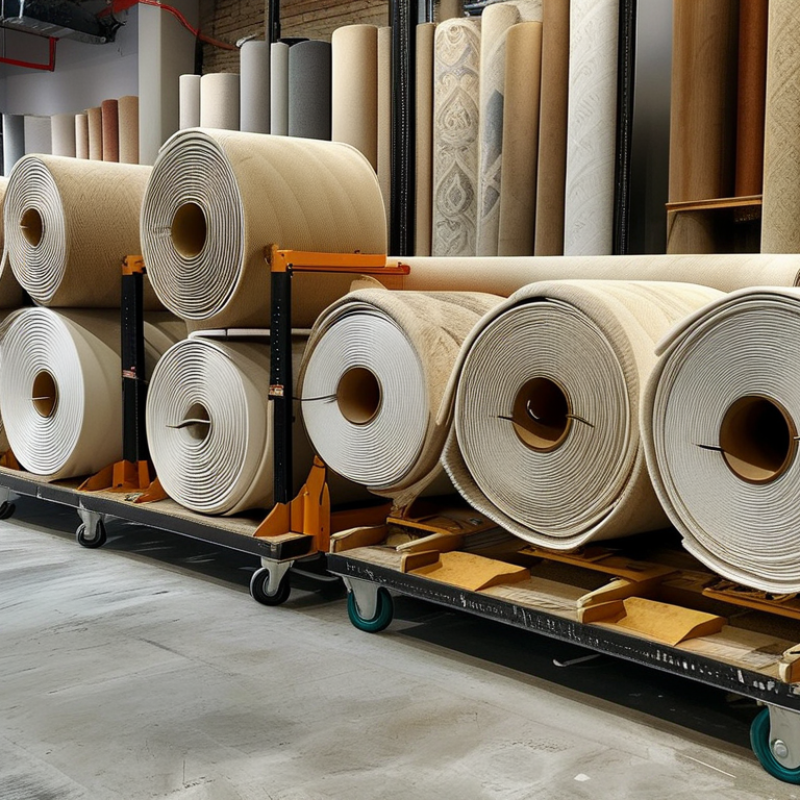
A carpet roll stand is a steel support frame designed to hold, rotate, and dispense heavy carpet rolls. It keeps the roll raised above the floor, allowing workers to measure or cut material with less dragging. Most stands use two side supports, a central spindle, and rotating bearings. The spindle passes through the roll core. As the carpet moves forward, the roll turns smoothly around it.
In practical warehouse use, stability matters more than appearance. Wide feet reduce rocking on concrete floors, while locking wheels help position the stand safely. Some models include adjustable arms for different roll widths and core diameters. A hand brake can control unwanted movement during cutting. Operators should check the roll weight before loading it, because an overloaded frame may bend or become difficult to control. The loading height also matters. If workers must lift too high, daily handling becomes tiring.
Global buyers should compare load capacity, frame dimensions, core compatibility, and replacement-part availability. Metric and imperial measurements can create confusion. Ask for clear drawings. A common mistake is choosing a compact stand without checking the widest carpet roll. It may fit narrow material but fail during larger orders. Welds should look even, and rotating parts should move without grinding sounds. No stand is perfect. Paint may scratch, wheels may need adjustment, and real warehouse floors are rarely level. Reliable instructions and responsive technical support often matter as much as the frame itself.
Carpet roll stands should match roll weight, diameter, handling frequency, and floor space. Grand View Research estimates the global carpets and rugs market could reach about USD 92 billion by 2030. That growth increases pressure on warehouses to store rolls safely and retrieve them quickly.
Vertical Carpet Roll Storage Racks suit narrow warehouses. Rolls stand upright in steel cradles, reducing floor usage and visible edge damage. They work well for showrooms and distributors handling mixed colors. Horizontal racks support heavier rolls with better stability. Adjustable arms help separate commercial flooring from residential materials. Check the rated load, frame spacing, and anchoring method before purchase.
Mobile Carpet Racks add casters for frequent layout changes. A-frame stands are useful near cutting tables because workers can pull one roll without moving others. Cantilever racks fit long rolls and allow forklift access from the front. Pallet-style storage works for bulk shipments, but it needs wider aisles. The Carpet and Rug Institute emphasizes proper handling to prevent crushing and distortion during storage.
In practical warehouse tests, poor spacing often causes more damage than weak steel. Leave clearance between roll ends and uprights. A rack may look efficient, yet become difficult to inspect. Reports from the Occupational Safety and Health Administration stress stable stacking and clear access routes. I would also recheck wheel locks and welds every month. That detail is easy to miss.
Choosing Carpet Roll Racking Systems starts with accurate load information, not appearance. Measure each roll’s length, diameter, core size, and actual weight. A roll may look manageable but exceed the stand’s rated capacity.
In warehouse inspections, I check the heaviest roll first. The stand should support that load with a clear safety margin. Confirm whether the rating applies to one level or the entire frame. Static capacity is not enough when rolls are moved with forklifts or lifting equipment. Ask for tested load data, material specifications, and weld inspection records. These documents improve purchasing confidence for global buyers.
Dimensions also affect daily handling. Leave space for operators to grip the roll without scraping nearby stock. Check aisle width, ceiling clearance, and door height before ordering. A 2.4-meter roll can become difficult to rotate in a narrow bay. Adjustable cradles are useful when inventory changes, but loose adjustment points can create instability. Secure them carefully. I have seen buyers calculate weight correctly yet overlook uneven warehouse floors. That mistake can cause leaning, vibration, and premature frame stress. Leveling feet or anchored bases may be necessary, depending on site conditions.
Compare metric and imperial specifications carefully. Confirm delivery packaging dimensions and local installation requirements. A qualified warehouse engineer should review the layout before final approval. That extra review may feel slow, but it often prevents expensive modifications later.
Global carpet distribution is expanding, with Grand View Research valuing the carpets and rugs market at about USD 72.8 billion in 2022. That growth increases pressure on storage safety, roll access, and showroom presentation. For global buyers, seven leading carpet roll stand options deserve attention: floor cradle stands, A-frame stands, vertical spindle stands, cantilever stands, mobile stands, hydraulic heavy-duty stands, and modular display stands. Each design fits different roll weights, core diameters, and warehouse layouts.
Floor cradles suit stable warehouse storage with simple loading. A-frame stands improve visibility and save aisle space. Vertical spindle stands work well for narrow rolls and sample areas. Cantilever models provide quick side access for frequent picking. Mobile stands add flexibility, especially during showroom changes. Hydraulic stands reduce lifting effort for heavy rolls. Modular units can combine storage with a Carpet Sample Display Rack, helping buyers compare textures beside full-size materials.
The Occupational Safety and Health Administration emphasizes stable storage, clear access, and controlled material handling. These principles matter when selecting imported equipment. The 2024 MHI Annual Industry Report also identifies labor availability and operational efficiency as major supply-chain concerns. A stand with locking casters, anti-tip supports, corrosion-resistant steel, and adjustable arms can reduce daily handling risks. Check the real load rating, not only the advertised maximum. Some specifications look impressive but ignore uneven flooring. That is where practical testing still matters.
A reliable carpet roll stand should control weight before it improves appearance. During warehouse checks, I look for a wide base, reinforced frame, and a clearly stated load rating. Anti-tip supports matter when rolls are tall or unevenly wound. Locking casters keep the stand steady during loading. They also reduce sudden movement on smooth concrete floors. Small details matter.
Mobility depends on more than wheel size. Swivel casters help workers turn through narrow aisles, while larger wheels handle floor joints and minor debris. A secure axle or cradle prevents rolls from slipping during transport. Check handle height, grip comfort, and turning clearance before purchase. These features affect daily strain and handling speed. A Carpet Sample Rack can support smaller displays, but it should not replace a heavy-duty roll stand.
Storage design deserves equal attention. Adjustable posts can hold different roll widths without wasting floor space. Open access makes stock counting easier, while protective edges reduce fabric damage. Measure doorways, rack spacing, and ceiling height first. Confirm capacity with technical documents, not only sales descriptions. I once underestimated turning space and created a frustrating bottleneck. That mistake still influences my inspections. Some stands look stable but flex under real loads. Test them gradually, and question any design that lacks clear maintenance guidance or replacement-part information.
Choosing among the seven best carpet roll stands requires more than comparing prices. International buyers should check load capacity, roll diameter, frame stability, and packed dimensions. A stand that works in a local warehouse may become expensive after overseas transport.
Shipping documents must match the physical product. Confirm the HS classification, country of origin, commercial invoice, packing list, and agreed Incoterms before production. Wooden packaging may require approved treatment and marking in the destination country. Metal frames also need accurate weight and measurement data for freight booking. Ask for load testing records and material specifications. Do not rely only on attractive product photos.
Compliance is not identical everywhere. Importers should verify local safety, labeling, and workplace equipment requirements with a qualified customs agent. I would not assume one certificate covers every market. That assumption can delay clearance. After-sales support matters just as much. Request a clear warranty period, spare-part availability, assembly instructions, and response times for damaged shipments. Remote video support can solve a loose fitting quickly, but replacement parts still need practical delivery options. One overlooked detail is repair packaging. If a wheel or locking pin fails, a small, well-labeled parts kit may prevent a costly return shipment. I have seen buyers focus heavily on the stand and under-plan the service process. That choice deserves reconsideration.
| Rank | Stand Configuration | Best Use | Working Width | Maximum Roll Diameter | Recommended Load | Typical Net Weight | Shipping Profile | Compliance and Documentation | After-Sales Priorities |
|---|---|---|---|---|---|---|---|---|---|
| 1 | Heavy-Duty Mobile Roll Stand | Warehouses, distributors, and high-volume flooring stores | 2,000–2,400 mm (78.7–94.5 in) | 500–600 mm (19.7–23.6 in) | 300–500 kg (661–1,102 lb) | 75–120 kg | Knock-down frame; palletized or export-crated; usually suitable for LCL freight | Load rating, steel grade, coating specification, assembly instructions, and packing list | Replacement wheels, shafts, bearings, and written load-limit guidance |
| 2 | Double-Sided Display Stand | Retail showrooms requiring more rolls in a compact aisle | 1,800–2,400 mm (70.9–94.5 in) | 350–450 mm (13.8–17.7 in) | 150–250 kg (331–551 lb) | 55–90 kg | Flat-packed uprights and crossbars; reduced cubic volume compared with welded units | Stability assessment, anti-tip instructions, fastener specification, and surface-finish details | Spare fasteners, leveling feet, wheel locks, and replacement support brackets |
| 3 | Adjustable Cantilever Stand | Mixed roll widths and frequently changing product displays | 1,200–2,400 mm (47.2–94.5 in) | 400–500 mm (15.7–19.7 in) | 100–200 kg (220–441 lb) | 45–80 kg | Modular components; economical for consolidated shipments and replacement-part orders | Adjustment range, safe locking method, center-of-gravity guidance, and assembly drawings | Locking pins, support arms, hardware kits, and remote assembly assistance |
| 4 | Compact Folding Roll Stand | Small retailers, temporary showrooms, and trade events | 1,000–1,800 mm (39.4–70.9 in) | 250–350 mm (9.8–13.8 in) | 60–120 kg (132–265 lb) | 20–45 kg | Folded or knock-down package; generally favorable for parcel or air-freight handling | Fold-cycle instructions, hinge safety information, packaging protection, and material declaration | Hinge components, locking clips, carry handles, and easy-to-follow setup documentation |
| 5 | Wall-Mounted Roll Rack | Permanent retail installations where floor space is limited | 900–2,400 mm (35.4–94.5 in) | 300–450 mm (11.8–17.7 in) | 50–150 kg per bay (110–331 lb) | 25–70 kg | Small boxed shipment; lower freight volume, but installation hardware must be protected | Wall-anchor requirements, substrate compatibility, fastener ratings, and installation drawings | Replacement arms, anchors, end caps, and technical support for different wall types |
| 6 | Heavy-Core Industrial Stand | Carpet manufacturers, cutting rooms, and industrial handling areas | 2,400–3,600 mm (94.5–141.7 in) | 600–900 mm (23.6–35.4 in) | 500–1,000 kg (1,102–2,205 lb) | 140–260 kg | Reinforced steel frame; normally shipped by pallet or wooden export crate via sea freight | Engineering load calculation, weld quality records, lifting points, and applicable machinery-safety review | Long-term parts availability, bearing replacement procedure, maintenance schedule, and service response time |
| 7 | Manual Unwinding and Cutting Stand | Retail cutting counters and order preparation for made-to-measure carpet | 1,800–3,000 mm (70.9–118.1 in) | 400–600 mm (15.7–23.6 in) | 150–350 kg (331–772 lb) | 80–160 kg | Long components may require oversized freight; protect cutting edges and roller surfaces | Guarding around cutting areas, operator instructions, sharp-edge warnings, and risk assessment | Cutting-blade replacement, roller alignment support, spare guards, and operator training materials |
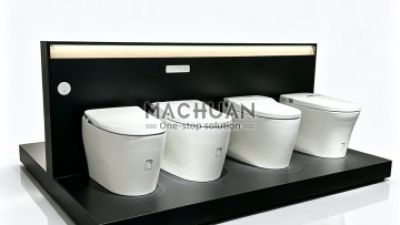
Freestanding double-sided toilet display stands with LED lighting are becoming an effective solution for presenting bathroom products in modern retail environments. Retail fixtures research highlights the growing importance of flexible layouts, strong product visibility, and an engaging in-store experience. A double-sided structure makes efficient use of floor space, allowing toilets and related fixtures to be viewed from multiple directions. Integrated LED lighting can emphasize product shapes, finishes, and key design details while creating a clean, contemporary atmosphere.
These display stands can be adapted for showrooms, department stores, home-improvement outlets, and temporary retail settings. Their freestanding format supports easy placement and reconfiguration, while customized shelving, signage areas, sample panels, and product supports can be developed according to specific merchandising needs. The products currently listed on our website are out of stock and provided for reference only. We offer fully customized solutions without MOQ, including design, dimensions, color, material, and surface treatment. Whether the preferred style is minimalist, industrial, warm, or premium, each display can be tailored to coordinate with the surrounding space and strengthen product presentation.
: Floor cradle stands suit fixed storage areas with simple loading. Their wide base supports rolls on level concrete floors. Measure the roll diameter before ordering. Stability matters more than appearance.
A-frame stands display rolls at an angle and use narrow floor areas. They help workers see colors and textures quickly. Add anti-tip supports for tall rolls. Narrow aisles still need turning clearance.
Vertical spindle stands suit narrow rolls, sample areas, and compact showrooms. They use height instead of broad floor space. Check ceiling clearance carefully. Tall designs can become awkward.
Cantilever stands allow side access without removing nearby rolls. They work well where workers pick materials repeatedly. Adjustable arms can fit different roll widths. Uneven loading may cause unwanted flexing.
Mobile stands help when displays move between rooms or sales areas. Locking casters keep the frame steady during loading. Larger wheels cross small floor joints more smoothly. Wheels alone do not guarantee safety.
Hydraulic heavy-duty stands reduce lifting effort for very heavy rolls. Confirm the working load, hydraulic maintenance needs, and lifting range. Do not trust the maximum figure alone. Real loads can behave differently.
Look for a reinforced frame, anti-tip supports, secure axles, and locking casters. Check the stated load rating against uneven floors. Inspect welds, edges, and replacement-part information. Small details matter.
Measure roll width, diameter, core size, doorway width, aisle space, and ceiling height. Check floor joints and turning areas too. I once underestimated turning space. The resulting bottleneck was avoidable.
A Carpet Roll Stand is a practical handling system designed to support, store, and dispense rolled carpet safely and efficiently. This guide explains how these stands work and compares key types for warehouses, retail stores, workshops, and installation sites. It highlights important evaluation factors, including roll capacity, overall dimensions, weight limits, frame stability, and compatibility with different carpet sizes. The article also presents seven leading stand options for global buyers, focusing on functional differences rather than brand names.
In addition, the guide reviews safety features such as locking mechanisms, protective supports, smooth mobility, and space-saving storage designs. Buyers will also learn how to assess assembly requirements, packaging, international shipping arrangements, product documentation, compliance expectations, warranty coverage, spare parts, and after-sales communication. By considering these factors together, businesses can select a durable, efficient, and suitable Carpet Roll Stand that supports safer material handling and long-term operational value.